Self-Portrait, Self-Mockery, The Mirror. Here is the audio track for those of you that didn't make it to the symposium.
Self-Portrait, Self-Mockery, The Mirror.
Showing posts with label Photography in Context. Show all posts
Showing posts with label Photography in Context. Show all posts
Wednesday, 23 March 2011

Sunday, 20 March 2011
Post-Symposium Thoughts
Below is my evaluation following our research symposium on Friday. (My work leading up to this can be found under the 'Photography in Context' label.)


Delivering the talk - Photo by Craig Leaper
I feel that my presentation went well, and equally I think the symposium was an overall success – I certainly enjoyed both. Although the idea of delivering a presentation was immensely nerve-wracking and the relief felt afterwards was substantial, it does feel something of a shame now that it’s over. I am looking forward to having a digital version, which can be dispersed online to a potentially larger audience. I feel I have a reasonably strong ability at public speaking and providing an engaging talk, so when coupled with the slides, this online presentation could hopefully prove appealing.
I based several elements of my presentation on the lectures of Dr Sally Miller, of the University of Brighton. Aesthetically, I kept the slides clean and simple using a white background, black text, a comfortable font, and straightforward arrangement of content, so that the audience would not be distracted. I also took inspiration from her lectures regarding the structure of the talk: firstly a theoretical introduction highlighting the wider points of the topic and bringing them together to construct an argument; secondly a progression evidencing practitioners’ work to demonstrate that argument; and finally – concluding on a specific thematic point, which related back to the exampled work, and therefore provided an argument in a manner which could be readily absorbed by the audience. It was this aspect of Sally Miller’s lectures – being in depth but also easily understood – which I wished to emulate. Asking some of the listeners afterwards, it seems that this was achieved.
For me, there is a lot of importance placed on the verbal delivery of a presentation because it has a significant effect on keeping the attention of the audience. When producing the final text, I found it easiest to write as I would speak, so quite often not in proper or formal sentences and frequently using colloquialisms. Under the advice of Ed Dimsdale, I practised the talk about four times – not too much (so as to keep it sounding fresh) but enough to become familiar with it and remember parts so that I could break from my script and look at the audience. I very much believe that a talk should be spoken and not read.
If any area of the symposium could have been improved, then I think it would have been the question sessions. This was something that I think everyone suffered from, and was probably due to an audience that was small, possibly nervous, and likely fatigued after an hour of listening. I had prepared and hoped for questions regarding the gender of self-mocking practitioners, or possibly on the ranging variations between performance and autobiography within self-portraiture. Having said that, I was quite pleased that a dialogue began around the elements of my practice which were related to this research, and furthermore how I could develop and present my own work. On reflection, this connection between my research and what I’m hoping to produce, has probably been one of the most beneficial outcomes of the module. I now have a solid contextual grounding which informs my own progressing work, and I also have a presentable piece of supporting research (and further background knowledge) which can assist the manner in which I convey my practice.
It is now clear in light of the above, that I have achieved that which I set out to: an investigation which informs and is informed by my practical work. I have learnt that to conduct such a study is hugely valuable to an emerging practitioner. Looking back to the proposal, the investigation became more specific with the theme of self-mockery taking precedent. This I think made the enquiry a more original piece. I have gained confidence in both undertaking and presenting research, a task which I would be happy to tackle again.
Tuesday, 15 March 2011
Two Purveyors of Eccentricity
A late edition to my presentation, among other small adjustments, following the feedback from last Friday's rehearsal, is the dancing sculpture work of Gilbert and George.
Throughout the research, artists that approach with an autobiographical perspective have been of greatest relevance. It has been especially interesting when the trait of self-mockery appears not only in the photographs or video they produce, but also in their presentation as practitioners – a trait ingrained in their personality. Gilbert and George's personality, or rather their joint persona (along with their humorous and ridiculing exhibition of it), is at the forefront of their 'singing and living sculptures' work, in particular their video piece Bend It.
Their recent appearance on This Week, discussing eccentricity and weirdness (it also features extracts from Bend It) can be found here.

Throughout the research, artists that approach with an autobiographical perspective have been of greatest relevance. It has been especially interesting when the trait of self-mockery appears not only in the photographs or video they produce, but also in their presentation as practitioners – a trait ingrained in their personality. Gilbert and George's personality, or rather their joint persona (along with their humorous and ridiculing exhibition of it), is at the forefront of their 'singing and living sculptures' work, in particular their video piece Bend It.
Their recent appearance on This Week, discussing eccentricity and weirdness (it also features extracts from Bend It) can be found here.

Gilbert and George Bend It (still)
Wednesday, 9 March 2011
Self-Mockery within Male/Female Self-Portraiture
Although it was never a planned enquiry of my investigation, an interesting issue of gender has arisen in my research. Without intention, all of the photographers/artists that I have chosen as suitable examples for my argument, are male. It seems that self-mockery within self-portraiture is a behaviour or endeavour more suited to men. I can see this relating to the fact that men seem to be dominant in the profession of stand-up comedy, and many comedians display self-mockery, or if not that, then a readiness not to take oneself seriously.

Taking this male reflection further, Bjorn Veno's blog is an excellent exploration into man's place today, and also this post 'The good men are not needed' by Danny Ledonne.
Women's self-portraiture tends to relate to more serious issues, notably often femininity or female identity. It seems to me that the female gender is the one more loaded with potential for reflection on its role and reception as a gender in society, simply because of its historical cultural background. When humour is used it tends to be more outwardly than inwardly critical – think Sarah Lucas, Tracy Emin or Julie Pochron. The male self-portraitist however, seems to have greater ease at traversing into a self-mocking stance.
The two examples of women using self-mockery I came across are the films of video artist Shannon Plumb, and Anna Fox's series Super Snacks. However Plumb's work doesn't seem particularly inward looking or in anyway autobiographical, and Fox's work comes across as rather despairing humour.

Shannon Plumb - The Corner (still)
I think, without intending it, the type of self-mockery which I have come to understand and question originates from the male reflection on his own inabilities or shortcomings. Naturally that is the self-mockery which I can relate to.
Taking this male reflection further, Bjorn Veno's blog is an excellent exploration into man's place today, and also this post 'The good men are not needed' by Danny Ledonne.
Friday, 4 March 2011
Self-Mockery from Sociology
I've managed to find a journal article that is specific to self-mockery, and which has provided me with a much needed theoretical resource to support my concluding points. Self-Mockery: An Alternative Form of Self Presentation is written by the sociologist Sheldon Ungar, and was published in 1984. I located the article in the 'Academic Search Complete' database and had to request if with 'document supply', and eventually had it provided by the British Library. Although the article may be dated, the points Ungar raises are still very relevant today and the following are particularly useful to my angle of enquiry:
"By revealing undesirable qualities, one can attenuate the feelings of envy and resentment that often accompany impressive images; such revelations can also decrease social distance among interactants."
"By calling attention to their own foibles, performers not only disarm others, but also affirm standards or rules in a fashion that is likely to augment positive sentiments among the participants. (Admissions of one's inadequacies can be infectious: other participants may be then likely to recount their own related foibles.)"
"..brief ventures into the unserious realm allow the performer to reveal aspects of the self that would otherwise be out-of-place. Furthermore, one can reveal weaknesses or faults and, by viewing them in a humorous vein, still retain one’s dignity and status."The above quotations back-up notions which I had suspected were occurring – the idea that self-mockery is a social tool used by an individual to create positive feeling to those he presents himself to. Also, although originating from self-criticism, self mockery allows one to bring their flaws to the fore in a favourable manner. And then it can be seen to result back to a self-centred behaviour – used to gain social ground – which brings up the idea of a perpetual oscillation between self-mockery and narcissism. This 'see-saw' is very much at evidence in my practice, and although I see no solution to it yet, perhaps I can conclude this talk with my hopes to unravel it.
Friday, 25 February 2011
Photo Synthesis Symposium
The Photo Synthesis Project refers to all major work – research and practical – of the final year students of the BA Photography course at Coventry University (myself being one of them). The first event to come under this banner is the following symposium, where the major research projects will be presented.

Click to Enlarge

Wednesday, 16 February 2011
The Persona Reinforced

Following on from my recent post on Steve Coogan's celebrity persona – I was struck by this comment he made writing in an article for the Guardian:
"I've been fortunate enough to work with the likes of Peter Baynham, Armando Iannucci, Chris Morris, Simon Pegg, Julia Davis, Caroline Aherne, Ruth Jones, and the Mighty Boosh – some of the funniest and most innovative people in British comedy. And Rob Brydon too."The article actually concerned the remarks of the Top Gear presenters regarding Mexicans (completely unrelated to my research). But the reason I chose to quote was because even when writing a critical and opinionated article on a separate matter, Steve Coogan still cannot resist displaying the same humorous, childish, mocking character (one that picks on Rob Brydon) that he so demonstrated in The Trip. What we are seeing here is this same persona eagerly pushing its way out, making itself known as a commonplace attribute of the actor/writer/celebrity that is Steve Coogan. The relevance here then lies in the appearance of this "loose version of himself", and his acknowledging of this played and playful persona as an irrevocable element of his self. And crucially the relationship between the two: the overall professional, down to earth character allowing and indulging the cheeky, self-centred 'sub-character'.
Tuesday, 8 February 2011
The Work and Character of Bjorn Veno
Veno's ongoing work 'MANN' concerns male identity, which he feels is in need of addressing in light of the extensive focus on femininity. His work looks at issues of male confidence into adulthood, as a man realises his inevitable failure at fulfilling the 'hero characters' of childhood. The work is in a sense autobiographical, or certainly self-reflective.


There is humour and self-mockery to his work, although it may not be apparent at the surface of the images, it is displayed in Veno's Artist Talk video – where he talks dryly and ironically of his own foolishness in holding onto childish desires. "You might be a big muscle builder, confident and secure, me - I have fleeting moments of confidence, the rest of the time I wonder: what the hell am I doing?" (0:46 - 1:07). What's really of note here is this repeating trait of self-mockery, it continues to reveal itself and it comes to define Veno's character as a practitioner. A result of self-portraiture – the artist lives in the work, and the work lives in the artist.


There is humour and self-mockery to his work, although it may not be apparent at the surface of the images, it is displayed in Veno's Artist Talk video – where he talks dryly and ironically of his own foolishness in holding onto childish desires. "You might be a big muscle builder, confident and secure, me - I have fleeting moments of confidence, the rest of the time I wonder: what the hell am I doing?" (0:46 - 1:07). What's really of note here is this repeating trait of self-mockery, it continues to reveal itself and it comes to define Veno's character as a practitioner. A result of self-portraiture – the artist lives in the work, and the work lives in the artist.
Friday, 4 February 2011
The skeleton needs some flesh
Today I received feedback from Ed Dimsdale for the planned structure which I had put together last week. Overall this seemed good. It is apparent that I need to be wary of the timing of the piece, as there is quite a lot of points I plan to make in support of my argument, but the flow of it is logical and it seems to present an interesting and original perspective.
I've added notes in red to explain the development and intended progression of each point.
The main concern now that the structure is confirmed, is to flesh it out with strong and relevant content. The tutorial with Ed, his suggestions and the discussion we had, has given me the confidence to do this. He has also mentioned the importance I must place on deciding what images to use to illustrate the argument.
I've added notes in red to explain the development and intended progression of each point.
Title: Self-portrait, Self-mockery, and the Mirror
Intro: Seeking to explain Self-mockery in photography and video (and visual art/culture). Rather than ‘seeking to explain’ it’s more the case of questioning what is happening, or may be happening, when artists et al use self-mockery.
1. The curiosity and intrigue of the mirror/reflection. Our interest in viewing our own image. This is the widest context with which the argument fits into. Lacan can be used as reference, but rather than spending time on it, its significance across history and many schools (Psychology, philosophy etc.) needs to be raised, encourage the audience to accept and move on.
2. The consciousness of presentation - the desire to be revered, to give best impression. Erving Goffman’s ‘presentation of self..’ will support this. (reading to be done).
3. Awareness of an image's ability to immortalise character. Could be considered as 2b. or 2+3 leads to 4. Again touch and don’t dwell on this. Worthwhile illustrating, or supporting this with theory if possible.
4. The will to make/possess/show images which display our desired qualities - an explanation of vanity?: Rather a behaviour which has elements of vanity, narcissism, self-centredness. Barthes' thoughts on being photographed may assist this point - the relationships between viewer, subject and creator. A social media context may be relevant also – the facebook profile photos.
5. Then the response to mock ourselves, our narcissism, vanity, and self-centredness. Use relevant artist examples here. Also some theory on Self-mockery would be useful, and may also help to explain point 6.
6. However, self-mockery being humour, gives us a position of performing to be funny, to make others laugh, to be liked, all about us(me) again..
Relevant artists:
· Boris Mikhailov – I am not I, Football
· Bjorn Veno – Mann - Skirgel
· Steve Coogan - playing a version of himself in The Trip
Other Areas (these are things I plan to mention but not discuss, and also for questions afterwards):
– Masquerade, dressing up, performing as another: Cindy Sherman, Yasumasa Morimura
– Femininity, concerning the appropriated images of women: Sarah Lucas Julie Pochron Tracy Emin. The issues surrounding gender are prominent in this field of discussion, and will need touching upon, as well as suit further discussion.
The main concern now that the structure is confirmed, is to flesh it out with strong and relevant content. The tutorial with Ed, his suggestions and the discussion we had, has given me the confidence to do this. He has also mentioned the importance I must place on deciding what images to use to illustrate the argument.
Wednesday, 2 February 2011
Boris Mikhailov in 'Auto Focus'
I recently bought Susan Bright's book Auto Focus: The Self-Portrait in Contemporary Photography (a good article on it here). Published just last year, the book is proving to be incredibly useful and informative as a reference for recent and current practitioners working with self-portraiture.

One such photographer whose self-portrait work I found in the book which suited my research admirably, was Boris Mikhailov. Susan Bright's comment says it as well as I ever could:


Bright's writing is concise, interesting, and accessible. In the introduction she mentions several times the continuing efforts exercised by photographers and artists to discover something of an objective or pure self through self-portraiture. Claude Cahun's quote sums up the challenge of it succinctly: “Under the mask is another mask, I will never finish lifting all these faces.” I can see this and the further points Bright raises in this part of her book, assisting me in providing a context from which my current photographic practice will emerge from.

There are many names I've come across before, and equally many which are new to me. Curiously there are also several practitioners I'm familiar with, but not for their self-portraiture work. This point alone speaks of the draw towards turning the camera on oneself that many photographers experience, even if that's not work that they spread widely nor produce often, it still seems to be a thing of intrigue for many artists.
One such photographer whose self-portrait work I found in the book which suited my research admirably, was Boris Mikhailov. Susan Bright's comment says it as well as I ever could:
“A wry sense of humour is often apparent throughout Mikhailov’s work, and tends to be the tie that binds his self portraits together. His comedic sensibilities can be seen in the series I am Not I, in particular his ridiculous posturing with a dildo. He pokes fun at his masculine body-builder pose – which aims to show the body to its best potential – by being unafraid to laugh at himself and mock the potency of the phallus with its plastic counterpart. The more recent photographs of Mikhailov playing football in the park rely upon a similar goofiness and slapstick humour, which turn what could be banal pictures into an almost tragicomic meditation on age and agility. They are evidence that he does not take himself too seriously.”

Boris Mikhailov - I am Not I

Boris Mikhailov - Football
Bright's writing is concise, interesting, and accessible. In the introduction she mentions several times the continuing efforts exercised by photographers and artists to discover something of an objective or pure self through self-portraiture. Claude Cahun's quote sums up the challenge of it succinctly: “Under the mask is another mask, I will never finish lifting all these faces.” I can see this and the further points Bright raises in this part of her book, assisting me in providing a context from which my current photographic practice will emerge from.
Sunday, 30 January 2011
Steve Coogan as Steve Coogan
The persona that is Steve Coogan, that he has created and exudes as a celebrity figure, includes and demonstrates a sense of self-mockery.

In his performance, Steve Coogan is ridiculing his own desire to be revered. He is drawing attention to this complex that he has (or at least that his celebrity self has) and then self-critiquing it with mockery. Hence this version of Steve Coogan who toils for fame and high regard only to be revealed as a fool and a failure. However, it's not a definite depression, but more of a tragic comedy, Coogan and Brydon do enjoy each other's company, and the show is very funny.
The significance for me, lies in Coogan's conscious decision to face, challenge, and excoriate an issue of his own public (and to many degrees, private) personality, and his use of humour in exposing it. This is why the actor Steve Coogan's portrayal of the character of Steve Coogan, is relevant to my research.
'This is how Michael Caine speaks', The Trip BBC2
In the recent BBC2 comedy The Trip Steve Coogan and Rob Brydon played 'loose versions' of themselves, improvising their dialogue, to a simple plot structure of a trip reviewing restaurants in North England. Coogan, or rather Coogan's character of Coogan, was in a continual state of petty competition with Brydon's (an excellent example can be seen below). They duelled mostly over voice impersonations, but also athletic ability, vocal range, even comedic prowess. Coogan remained harshly and childishly critical of Brydon's performances, always seeking to prove himself as the more talented, the more knowledgeable, and the funnier. In these attempts he ultimately fails. Brydon trumps unwillingly - content with his career, family, and achievements. Coogan struggles on - frustrated with his self-implied shortcomings: in one scene, he whines to his agent about wanting to star in 'good films'; in another he attempts to mimic Brydon's popular 'small man in a box' in front of the mirror; in others we see evidence of his problematic family and love life. All of which culminates in the final scenes of the series, where Brydon returns to his wife and child in a warm home, whilst Coogan finds himself alone in a stylish and cold London flat.

Steve Coogan (left) and Rob Brydon in The Trip
In his performance, Steve Coogan is ridiculing his own desire to be revered. He is drawing attention to this complex that he has (or at least that his celebrity self has) and then self-critiquing it with mockery. Hence this version of Steve Coogan who toils for fame and high regard only to be revealed as a fool and a failure. However, it's not a definite depression, but more of a tragic comedy, Coogan and Brydon do enjoy each other's company, and the show is very funny.
The significance for me, lies in Coogan's conscious decision to face, challenge, and excoriate an issue of his own public (and to many degrees, private) personality, and his use of humour in exposing it. This is why the actor Steve Coogan's portrayal of the character of Steve Coogan, is relevant to my research.
'This is how Michael Caine speaks', The Trip BBC2
Friday, 28 January 2011
Structure Planning
Today I presented the research to date to the group and the Wise Ones. In preparation for this I drew up an initial plan of the structure of my presentation, based on what I have discovered so far and the specific direction I want the talk to take.
Title: Self-portrait, Self-mockery, and the Mirror
Intro: Seeking to explain Self-mockery in photography and video (and visual art/culture).
1. The curiosity and intrigue of the mirror/reflection. Our interest in viewing our own image.
2. The consciousness of presentation - the desire to be revered, to give best impression.
3. Awareness of an image's ability to immortalise character.
4. The will to make/possess/show images which display our desired qualities - an explanation of vanity?
5. Then the response to mock ourselves, our narcissism, vanity, and self-centredness.
6. However, self-mockery being humour, gives us a position of performing to be funny, to make others laugh, to be liked, all about us(me) again..
Relevant artists:
· Boris Mikhailov – Self-portraits
· Bjorn Veno – Mann
· Steve Coogan – The Trip
Other Areas (these are things I plan to mention but not discuss, and also for questions afterwards):
– Masquerade, dressing up, performing as another: Cindy Sherman, Yasumasa Morimura
– Femininity, concerning the appropriated images of women: Sarah Lucas


Sunday, 16 January 2011
The Mirror Stage

Steven Z. Levine is the author of Lacan Reframed, which aims to provide a guide for the art student, to the psychoanalytical theories of Jacques Lacan. In my case, this is Lacan's developmental concept 'The Mirror Stage'.
The following are relevant (quotations and paraphrases):
- A summary of the story of beautiful Narcissus – spots his reflection in the forest pool, the impossible love of is own reflected image, the unbridgeable split between desiring object and desired object, resolved by his death and metamorphosis into the flower - at least that's the mythological resolution.
- "I is another." (Arthur Rimbaud) The beautiful image of self exists outside of oneself, but we recognise it – 'narcissistic identification'.
- Lacan's contribution to the formation of the Ego (of Freudian theory): "Based on the alien but alluring images glimpsed in the mirror in childhood, the Ego was crystallised in response to the admiring behaviour of the Mother" (Levine) 'The Mirror of Mother and Child'
- Which leads to: 'A lifelong conflict, started at childhood, between the Ego and alter Ego – Self and other – due to recognising the alter Ego in the eyes of the mother.' And hence: 'A stand off between 'the me I see myself as being' and 'the me I want to be and can never be.'
- "In his insistence on the dangerous duel of self and other, .. Lacan was extending Freud's formulations on the self-loving and self-loathing narcissism of the Ego"
There were many more complex psychological explanations and suggestions of Lacan, all of which centre around a conflict between the self and other, and which relate back to the mirror stage. However seeing that I don't need to progress into those with any depth, I can take away the inference that the Mirror Stage plays a crucial developmental part in the notion of self, even if that notion is constantly fragmented and ill-defined.
Friday, 7 January 2011
'Here's Looking at You'
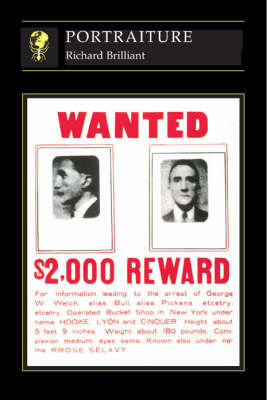
'Here's Looking at You' is the title of the fourth chapter of Richard Brilliant's book Portraiture, and in that chapter he discusses self-portraiture across all mediums of art. So although not overtly relevant to my specific angle of research, it is still a very useful core text for this field.
There are numerous points of note throughout the chapter, below are those which stood out as greatly significant to me:
- Brilliant mentions the mirrors input to self-portraiture - 'The fallacy of the reflection, our own internal images of self are misleading compared to how other see us. Seeing your reflection unexpectedly and being surprised by the image is testimony to the varying imagined perspectives you hold of your appearance/presentation.
- He also cites philosopher David Hume's musings on the notion of 'self': "For my part, when I enter most intimately into what I call 'myself', I always stumble on some particular perception or other, of heat or cold, light or shade, love or hatred, pain or pleasure. I never can catch 'myself' at any time without a perception, and never can observe anything but the perception ... If anyone , upon serious and unprejudiced reflection, thinks he has a different notion of 'himself', I must confess that I can reason no longer with him."
- Parmigianino's Self Portrait in a Convex Mirror. Where the viewer is privy to the moment of an artist meeting his own reflection. 'Parmigianino represents himself as a subject experiencing his own (re)presentation in a mirror.'
- "With greater or lesser degrees of success, self portraiture always makes a concentrated autobiographical statement - the manifesto of an artists introspection" (Brilliant)
- Norman Rockwell's Triple Self-Portrait. ".. it is so explicitly self-referential and demonstrates so well the distortions in the mirror reflection. .. one could hardly imagine a more explicit statement of the 'I' in the work, and of the artists engagement with the concept of 'I-ness'." (Brilliant)
- Brilliant also mentions something that I would term as 'the vulnerability of sharing introspection' which is a threat to all self-portraying artists: "The natural impulse to protect one's personal privacy from others conflicts with that artists equally natural desire to create an autobiographical image that, being a separate entity, lives outside of himself and may escape his control."

Parmigianino - Self Portrait in a Convex Mirror

Norman Rockwell - Triple Self-Portrait
Update: Although initially conducted for my research module, I could conclude that this reading will in fact have a more direct use to the major practical project which is to commence soon. The works of Rockwell, Parmigianino, Lovis Corinth, Artemisia Gentileschi and others mentioned in the chapter (and furthermore Brilliant's commentary on them) have sparked lots of ideas for self-portraiture work, particularly in relation to the mirror/reflection - see here.
Thursday, 2 December 2010
Feedback and Development from Proposal
The feedback that came back from the proposal seemed positive. It was stated that the direction I was pursuing with these ideas seemed strong and well reasoned, but I acknowledged that the research will likely need to be narrowed down further as I progress with it. Overall the proposal is good, and Ed was happy for me to continue without any major alterations.
A particular point that Ed responded to and that enthused me also, was the notion of an oscillation between narcissism and self-mockery, a relationship which can be found within the humourous self-portrait. The two behaviours, although opposite, are both inward-looking and seem to have a supportive relationship whereby one allows and justifies the other. I can recognise this characteristic within my own work, and I'm hoping to track it down in other practitioners also.
Ed suggested that the Bibliography be widened - which I am hoping to accomplish as I 'circle inwards' around my topic, and locate further resources. Also he thought that the concept of humour should now play a significant part in the research, and in the presentation as well seeing as my own practice relates to it. Then the notion of self-mockery is something which I can really play with, and it could potenially assist to liven up the talk.
The following resources were suggested by Ed:
A particular point that Ed responded to and that enthused me also, was the notion of an oscillation between narcissism and self-mockery, a relationship which can be found within the humourous self-portrait. The two behaviours, although opposite, are both inward-looking and seem to have a supportive relationship whereby one allows and justifies the other. I can recognise this characteristic within my own work, and I'm hoping to track it down in other practitioners also.
Ed suggested that the Bibliography be widened - which I am hoping to accomplish as I 'circle inwards' around my topic, and locate further resources. Also he thought that the concept of humour should now play a significant part in the research, and in the presentation as well seeing as my own practice relates to it. Then the notion of self-mockery is something which I can really play with, and it could potenially assist to liven up the talk.
The following resources were suggested by Ed:
- Staging the Self - a book on self-portrait photography (1840's - 1980's)
- Mirror mirror - a book by Liz Rideal which accompanied an exhibition of self-portraits by women at the NPG.
- Emmanuelle Levinas's philosophy on the 'face to face encounter' and 'face to image encounter'. Possibly titled Beholding the Other.
Tuesday, 9 November 2010
Self-portraiture on the BBC
Art critic Laura Cumming presented 'Ego: The Strange and Wonderful World of Self-Portraits' broadcast on BBC4 last Thursday. She didn't examine photography, but the points of discussion, the arguments, criticisms, and other theories were I think, still applicable to lens-based work. Unfortunately the full programme is no longer available, but the following clip is a good example of where photographic self-portraits could be considered in addition to her point.
Later on in the programme, there was a very interesting scene where Laura Cummings and Patrick Hughes, whilst standing in front of one, contemplated the mirror, or rather the reflection. I remember Hughes' point being the curiosity between the two perceptions of the mirror: on one hand it can be so convincing, so easily taken for granted that it is absolutely real, on the other, its counter-reality - the shininess, the scaled down size, the inverted image, and the struggle and hence the fascination when faced with a mirror.
Later on in the programme, there was a very interesting scene where Laura Cummings and Patrick Hughes, whilst standing in front of one, contemplated the mirror, or rather the reflection. I remember Hughes' point being the curiosity between the two perceptions of the mirror: on one hand it can be so convincing, so easily taken for granted that it is absolutely real, on the other, its counter-reality - the shininess, the scaled down size, the inverted image, and the struggle and hence the fascination when faced with a mirror.
Friday, 5 November 2010
The Proposal
Below is my Research Project Proposal for 'Working with Photography in Context' (as informed by the tutorials evidenced here and here, and the initial research found here).
Title
Title
The Photographic Artist’s Response to The Mirror.
Description of Subject to be Investigated
- Looking at the relationship through portrait photography between the photographer, subject and viewer (operator, subject, spectator; to do, to undergo, to look) and how it is adjusted to fit to a self-portrait.
- Examining the behaviour of the self-photographer as a subject – their performance, and how they explore the conscious presentation of self (as affected by the mirror).
This investigation emerges from work I conducted earlier in the year: Self Videos (and which is continuing) looking at something of an obsession with being the subject – a performer, a desire to be funny, self-mockery, and narcissism.
Anticipated Method of Presentation
An illustrated talk – I feel that talking is perhaps the strongest way to communicate an idea empathetically to an audience. I would also like to include some element of performance to it, possibly have the audience viewing themselves (mirrors or webcam).
Sources to be Utilised
Texts on photography, portraiture, and self-portraiture including:
- Richard Brilliant’s Portraiture, in particular the chapters ‘Here’s Looking at You!’ and ‘Fashioning the Self’.
- Essays from Self-Portrait in the Age of Photography edited by Erika Billeter.
Texts on the psychological aspect of this research:
- Jacques Lacan’s psychoanalytic Mirror Stage concept, as discussed by Steven Z. Levine in Lacan Reframed.
- The Presentation of Self in Everyday Life by Erving Goffman.
Research into appropriate photographic practitioners including:
- Interviews (either self-conducted or reading those conducted by others).
- Analytical and critical writing on their work.
Also I may potentially be able to draw input from my own developing practical work.
Methods to be Used in Acquisition of Sources
My best approach to texts is to read short amounts frequently, keeping notes and then returning to relevant points at a later time – when the direction of my argument becomes clearer. This method will hopefully keep the reading engaging, as well as preventing fatigue. When interviewing practitioners, I aim to give them a brief account of the research being conducted and explain why their work may be relevant to it. This background will then give them the opportunity to have greater interest and understanding, before answering questions.
Methods of Interpretation
I hope to draw some conclusions specific to this investigation by bringing together the three strands of research: self-portraiture and performance (photographical); self-presentation and contemplation of self-image (psychological); the reasons, motives, and intentions behind the work of practitioners. I will then see if I can further establish/confirm those ideas by examining them in conjunction with appropriate photographic work, possibly my own.
Plan/Schedule of Work – Presentation on 18/3/11.
- Discuss and prepare initial aims of research, locate principal sources for research. [Done]
- Read widely on the topic up till end of December, noting anything of interest. Gather information from other sources (interviews etc.)
- During and after the main reading (December into January) analyse and organise the research, evaluating what may be useful.
- Plan the presentation - the ‘route’ of the argument (January).
- Return to the sources of research to strengthen the argument, possibly look to further reading if deemed necessary (January – February).
- Write the argument out in a clearly constructed manner (February).
- Prepare for the presentation and practise the talk (February and March).
- Extra time for refining etc. (March).
Monday, 1 November 2010
Pursuing a Hypothesis and/or a Question.
The priority for this week was to begin considering the proposal, and for me that meant narrowing the topic down a bit. I needed to pinpoint a hypothesis, or at least determine more specific questions to investigate.
I began by talking about a few ideas and notions (those mentioned at the bottom of my previous post) with Ed Dimsdale. I expressed my curiosity to the performance, or the 'performativity' of a self-portrait. At this point Ed mentioned the Mirror, which led to us discussing the consciousness and fascination with the mirrored-image of self; how one uses a mirror to recognise oneself; the modes of presentation and performance which follow studying from one's reflection.

Ilse Bing Self-Portrait with Mirrors
From this conversation, and relating to the now more specified direction of the investigation, Ed suggested Erving Goffman's book The Presentation of Self in Everyday Life.
Thursday, 28 October 2010
Research Beginnings
A few notes from the reading of the past week.

From Portraiture
I found a couple of other books which would also help me in this respect. Train Your Gaze by Roswell Angier, and Self-portraiture in the Age of Photography edited by Erika Billeter. As well as helping with the method above, I think these 'simpler' reads will give me a more comfortable starting point to the topic, and hence more confidence when tackling the in-depth literature.
From Train Your Gaze


From Camera Lucida:
- In chapter 4, Barthes talks of three practices (or emotions, or intentions) of making a photograph: to do, to undergo, to look; the Operator, the Subject, and the Spectator – the same three I had established previously.
- In chapter 5, he talks of being photographed: "I instantaneously make another body for myself, I transform myself in advance into an image." He goes on to talk about his (the subject's) concern to appear revered: "If only I could "come out" on paper as on a classical canvas, endowed with a noble expression – thoughtful, intelligent, etc.!"
- He goes on to mention the uneasiness of seeing oneself on paper, different from a mirror, and also says: "For the photograph is the advent of myself as other: a cunning dissociation of consciousness from identity."
From Portraiture
- 'the oscillation between art object and human subject, represented so personally, is what gives portraits their extraordinary grasp on our imagination' - portraits are intriguing because of the resemblance, the notion that it is them.
- A portrait is a portrait because of the artist's intention to allude to the subject by representation (portray them) foremost over the viewer's recognition of the subject.
I found a couple of other books which would also help me in this respect. Train Your Gaze by Roswell Angier, and Self-portraiture in the Age of Photography edited by Erika Billeter. As well as helping with the method above, I think these 'simpler' reads will give me a more comfortable starting point to the topic, and hence more confidence when tackling the in-depth literature.
From Train Your Gaze
- 'Portrait photography is about (or records) the exchange between photographer and subject' - A solid and simple way of summing it up, which of course leads me to question the nature of that exchange, or of that record, when the subject and photographer are the same.
- Bayard's early photograph 'Self-portrait as a drowned man' was noted as one of the first portraits to deal with strong personal emotion, rather than informative representation.

From my personal reflection
- The idea that the triangle relationship is not flattened, that the photographer and subject, although the same person are taking different roles (intentions?).
- I grasped on to the idea of performance. The inherent difference between portrait and self-portrait, being that the subject knows the image is being made, in what context it is being made, how it will be presented, how they look, how they will appear. And so through knowing, they will behave, perform.
Following this reading/thought will be the second tutorial with Ed Dimsdale, and an attempt to determine a hypothesis.
Saturday, 23 October 2010
Expanding the Initial Idea
Progressing from last weeks thoughts, I 'fleshed out' the intial research idea under the following suggested sub-headings. This was in preperation for our first tutorial with Ed Dimsdale, of LCC.
Question
How does a viewer judge a subject in a self-portrait? What control does a photographer have on that judgement?
Create a Title
The Challenging Portraits of Selves.
Expand the questions into a paragraph
There is often considered a triangle relationship with a portrait photograph, between the viewer, the subject and the photographer. The photographer is often considered to have a form of power here, controlling or inciting the viewer's opinion of the subject; think of Martin Parr, Diane Arbus, Bill Owens. When the three-way becomes two-way, when the photographer is the subject, the viewer is aware of the photographer's editing and presenting decisions affected by placing themselves in front of the camera. The viewer is no longer just looking but being looked at. How is the viewer's judgement of the subject now challenged or influenced by the self-portraying artist?
Three Photographers
Nikki S Lee
 Jo Spence

Sam Taylor-Wood

Other areas of investigation
Self-portraits in painting, in video.
Question
How does a viewer judge a subject in a self-portrait? What control does a photographer have on that judgement?
Create a Title
The Challenging Portraits of Selves.
Expand the questions into a paragraph
There is often considered a triangle relationship with a portrait photograph, between the viewer, the subject and the photographer. The photographer is often considered to have a form of power here, controlling or inciting the viewer's opinion of the subject; think of Martin Parr, Diane Arbus, Bill Owens. When the three-way becomes two-way, when the photographer is the subject, the viewer is aware of the photographer's editing and presenting decisions affected by placing themselves in front of the camera. The viewer is no longer just looking but being looked at. How is the viewer's judgement of the subject now challenged or influenced by the self-portraying artist?
Three Photographers
Nikki S Lee


Self-portraits in painting, in video.
Ed provided the following suggestions for research:
- Liz Rideal's work.
- A previous exhibition at The National Portrait Gallery of Rembrants self-portraits.
- The book Portraiture by Richard Brilliant.
- Possibly a chapter from Graham Clarke's The Photograph.
- An early chapter from Camera Lucida where Barthes talks of anxiety of being photographed.
- Jacques Lacan's psychoanalytic concept - The Mirror Stage - the developmental stage where a person recognises and understands their own reflection.
- The notion of 'The Real' as discusssed by Catherine Belsey in Culture and the Real.
- Francessca Woodman - the notion of performance.
- Hypollyte Byard's self portrait as a drowned man.
Subscribe to:
Posts (Atom)
